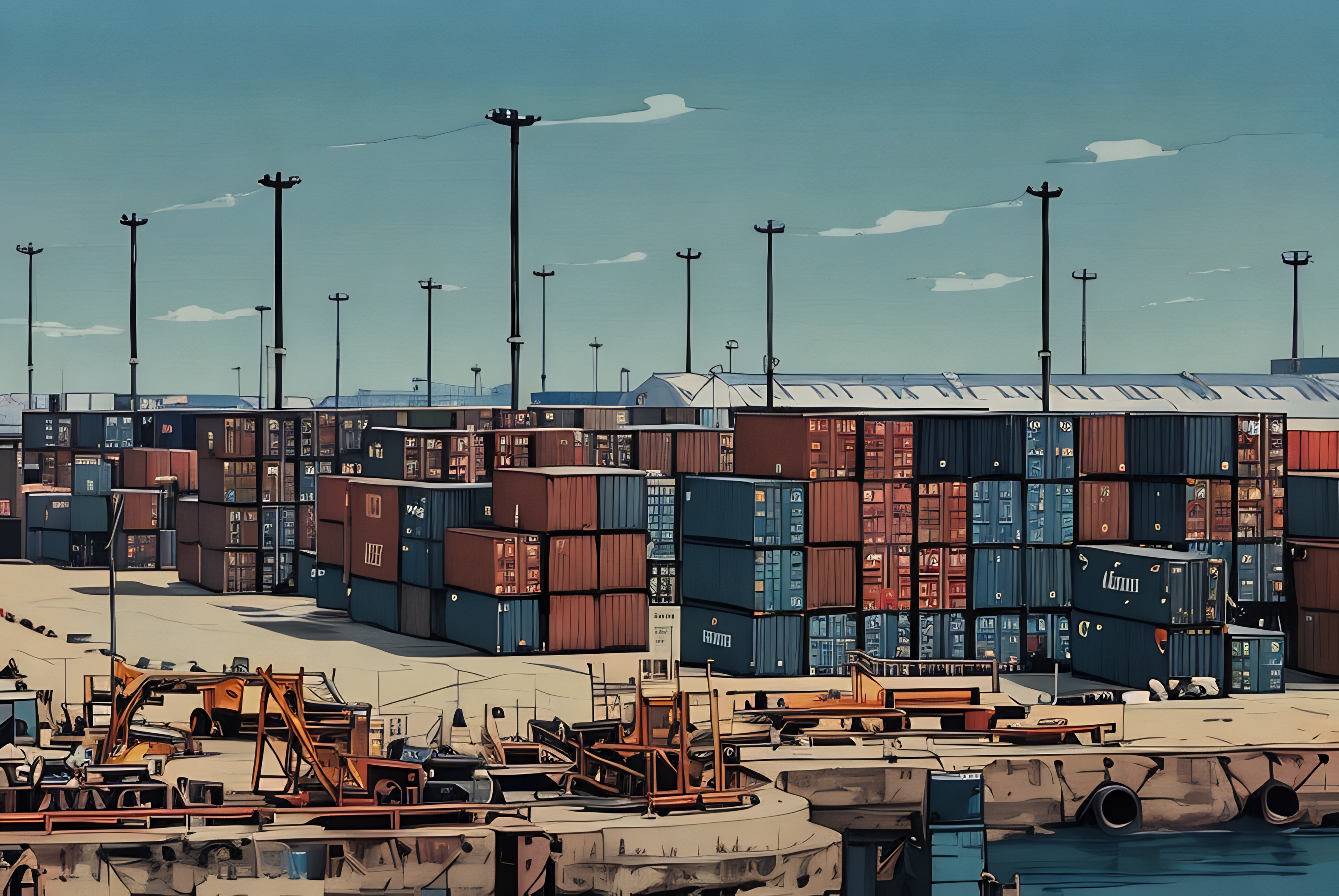
Market opportunity depends on operational consistency. Businesses may identify strong customer demand and attractive market conditions while still struggling to execute effectively because supply chain and logistics systems cannot support reliable delivery.
Supply chains influence cost structure, scalability, customer satisfaction, and operational resilience. Weaknesses often remain hidden during early-stage planning and become visible only after operations begin. Businesses that assess sourcing and logistics conditions early are generally better positioned to maintain continuity and scale efficiently after entry.
Supply chain analysis therefore forms a core part of practical market evaluation rather than a secondary operational consideration.
Supply Chain Reliability Shapes Operational Stability
Reliable access to inputs is essential for maintaining consistent operations. Supplier concentration, import dependency, quality variability, and infrastructure limitations all influence how stable a supply chain remains once the business begins operating within the market.
In some jurisdictions, supplier networks may be narrow or heavily dependent on imported materials. In others, availability may fluctuate due to infrastructure constraints, regulatory conditions, or inconsistent production capacity. These conditions affect both operational continuity and strategic flexibility.
Businesses therefore need to evaluate:
- how diversified and reliable supplier networks are within the market
- whether sourcing depends heavily on imports or concentrated suppliers
- how consistently inputs meet operational and quality requirements
- whether alternative sourcing options exist if disruption occurs
This analysis provides a clearer understanding of how resilient the operating model will remain as market conditions evolve.
Siyabonga supports businesses by evaluating supply chain structure and sourcing reliability within the broader context of market entry and operational scalability.
Logistics Infrastructure Influences Cost and Execution
Transportation systems, ports, warehousing capacity, and distribution networks all affect how efficiently products and services move through a market. These factors influence delivery timing, operating cost, customer experience, and overall execution capability.
Well-developed logistics systems support predictability and operational efficiency. Less developed infrastructure may increase lead times, reduce reliability, and create additional coordination requirements that place pressure on margins and customer service.
Logistics conditions often influence:
- delivery consistency and operational responsiveness
- overall transportation and distribution costs
- inventory management requirements and working capital pressure
- the ability to scale operations efficiently over time
These factors become particularly important where customer expectations depend on speed, reliability, or service consistency.
Siyabonga works with businesses to assess how logistics infrastructure affects operational viability, cost structure, and long-term scalability before expansion occurs.
Supply Chain Risk Extends Beyond Daily Operations
Supply chain exposure includes more than immediate sourcing or transportation challenges. Political instability, regulatory changes, trade restrictions, and economic disruption can all affect supplier reliability and logistics continuity over time.
Businesses that depend heavily on single suppliers, limited transportation routes, or concentrated sourcing arrangements often face increased operational vulnerability if conditions change unexpectedly.
This analysis requires evaluating:
- how exposed the supply chain is to political or economic disruption
- whether import or export restrictions could affect operations
- how dependent the business is on individual suppliers or logistics routes
- how quickly sourcing and distribution can adapt if disruption occurs
Understanding these risks allows businesses to structure contingency planning and preserve operational flexibility as conditions evolve.
Supply Chain Structure Must Support Business Strategy
Supply chain design should align directly with the broader commercial strategy of the business. Premium offerings depend heavily on reliability, consistency, and quality control. Cost-focused models rely more heavily on efficiency, scale, and operational optimization.
Misalignment between supply chain structure and market positioning can create operational pressure even where demand remains strong. Businesses that position themselves around service quality while operating through unstable logistics systems may struggle to maintain customer expectations consistently.
Operational design therefore becomes part of strategic positioning rather than a purely technical function.
Siyabonga advises businesses on these considerations by aligning sourcing, logistics, and operational structure with broader commercial objectives and market positioning.
Supply Chain Analysis Supports Long-Term Scalability
Supply chain evaluation improves broader strategic planning. It influences capital allocation, inventory strategy, market sequencing, pricing structure, and operational flexibility.
Businesses that understand supply chain conditions early are better positioned to allocate resources efficiently and avoid reactive operational adjustments after entry begins. They are also more capable of scaling sustainably as customer demand and operational complexity increase over time.
This perspective supports stronger execution discipline and improves long-term resilience across changing market conditions.
Final Thoughts
Supply chains and logistics systems determine whether businesses can deliver consistently once market entry occurs. Sourcing reliability, transportation infrastructure, and operational resilience all influence scalability, profitability, and customer experience.
Businesses that assess these dynamics thoroughly are better positioned to structure reliable operations, manage disruption risk, and sustain performance as markets evolve.
Siyabonga supports businesses through supply chain and logistics analysis designed to ensure that operational infrastructure aligns with both market conditions and long-term strategic objectives.